
Gaps and Uneven Front Teeth: Braces Treatment in Progress, Explained
The first photograph shows a smile mid-story: front teeth of visibly different heights and positions, a gap where a tooth sits out of line, and edges that do not form a level curve. The second photograph shows the same smile with braces fitted — brackets precisely placed, wire engaged, green ties holding it in. This is the stage most patients are curious about: what exactly is happening now?
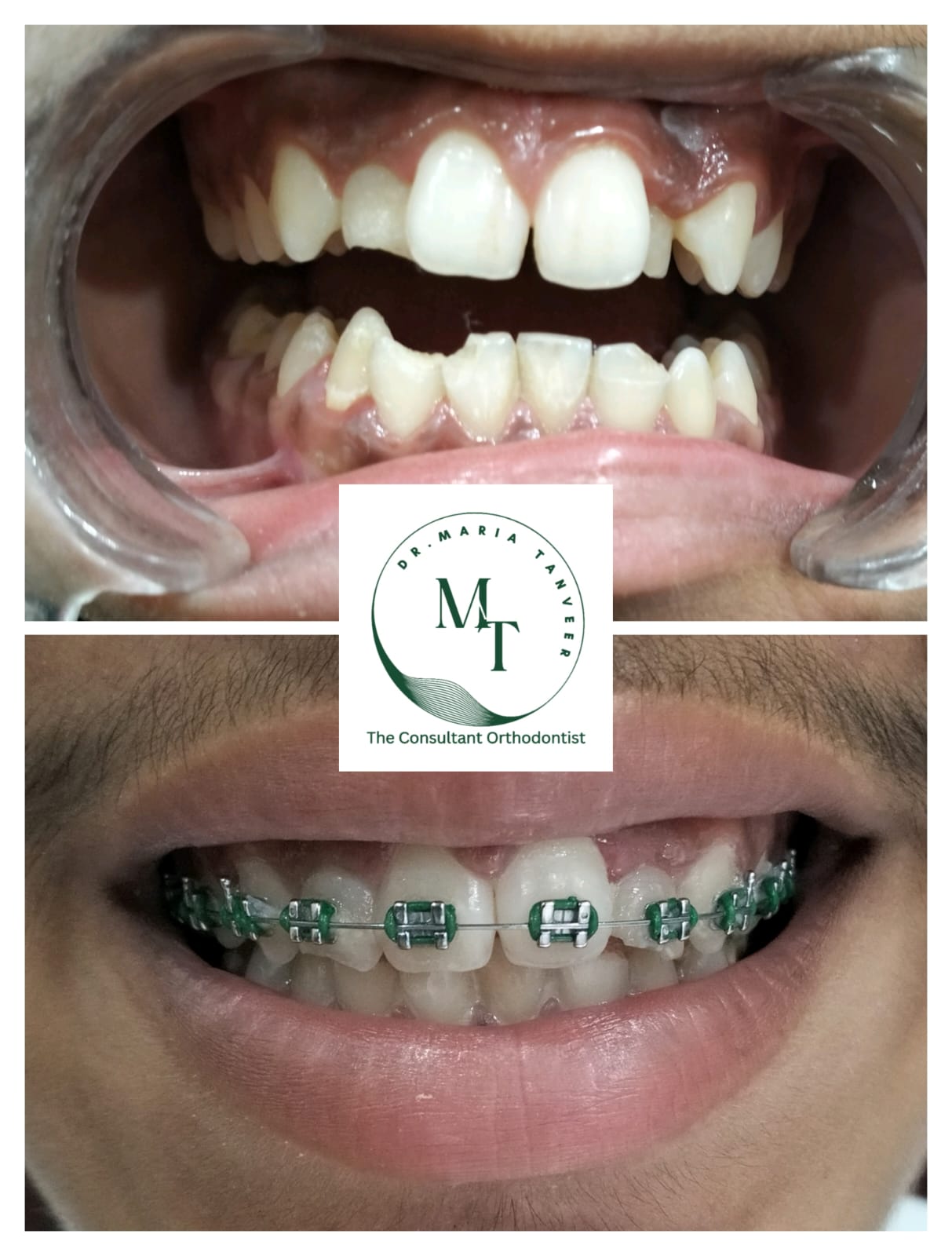
What the orthodontist sees in the “before” photo
Uneven tooth heights usually mean some teeth have erupted further than others, or are tilted. A gap beside a crowded tooth means space is in the wrong place — too much in one spot, too little in another. The treatment plan redistributes that space: teeth are uprighted, levelled to the same height, and gaps are closed by moving teeth into them — not by making any tooth wider.
What happens at this stage of treatment
- Brackets are positioned on each tooth at a planned height — this positioning is what levels the smile line
- A light, flexible first wire begins gentle alignment
- Ties (the green rings here) hold the wire in each bracket; their colour is the patient’s choice at each visit
- Over the following visits, wires progress and the teeth visibly straighten stage by stage
Mid-treatment honesty: Teeth often look temporarily “different-worse” partway through — gaps move around as space is redistributed. That is planned, not a problem. Judging a braces case halfway is like judging a haircut halfway.
FAQs
How often are the ties changed? At each adjustment visit, usually every 4–6 weeks — and you can pick a new colour each time.
When will the gap close? Gap closure is deliberately sequenced after alignment; your orthodontist will tell you which stage your case is in.
Can I choose clear ties instead? Yes — ties come in many colours including tooth-coloured options.
Final Thoughts
Every finished smile in our gallery passed through this exact stage. If your teeth look like the first photo, braces can level and align them with a proper plan. Book a consultation at Braces & Faces Multi Speciality Dental Clinic, Susan Road, Near Bismillah Foods, Madina Town, Faisalabad, or call 0316-4936792.
This article is general educational information about a real treatment category at our clinic. It is not a diagnosis or treatment plan for any individual; only an in-person examination can determine what you need.