
Crooked Teeth to a Confident Smile: Orthodontics and Jaw Surgery in Three Stages
These three photographs show one patient’s combined orthodontics and jaw surgery treatment. Stage one: before treatment, with teeth erupting in different directions, overlapping, with gaps in the wrong places and crowding in others. Stage two: the orthodontic (braces) phase, with brackets and wires in place, doing the quiet, steady work of moving each tooth. Stage three: the finished result after orthognathic (jaw) surgery and finishing orthodontics — a level, even smile with the bite closing properly. No filters, no shortcuts — and not braces alone: the final result required combined orthodontic treatment and jaw surgery.
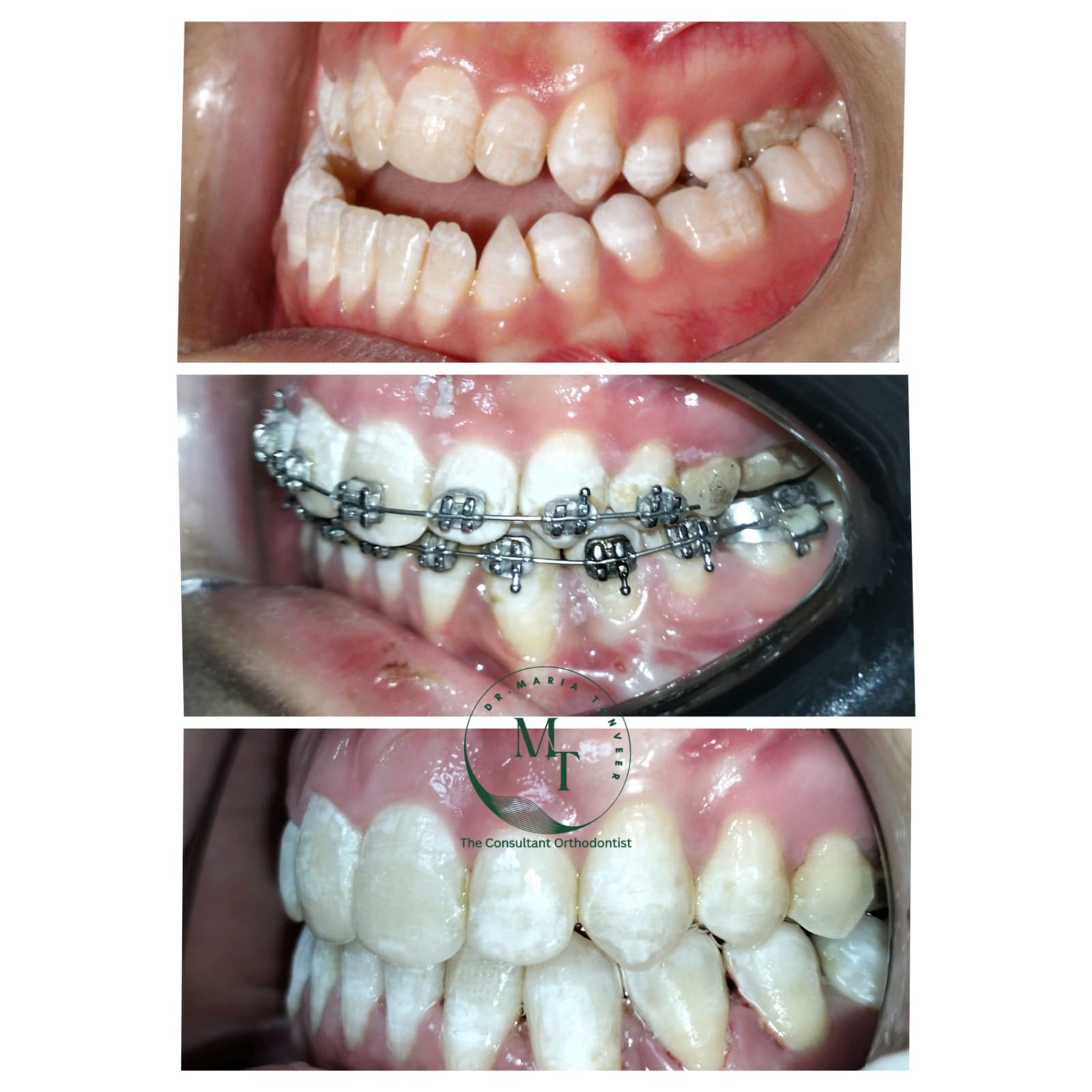
What the “before” stage usually involves
Teeth like those in the first photo rarely trouble only the appearance. Crowded and rotated teeth trap plaque in places a brush cannot reach, so decay and gum inflammation follow them. The bite is uneven too, which means some teeth take far more chewing force than they were built for.
Stage two — what actually happens during treatment
- Brackets are bonded to each tooth and connected by an archwire
- The wire sequence progresses from flexible to stronger wires, aligning, levelling and then finishing the bite
- Adjustment visits every few weeks keep the movement on plan
- Elastics may be added to correct how the upper and lower teeth meet
Why jaw surgery was needed
Braces move teeth; they cannot reposition the jaw. In this case, the jaw position also needed correction, so orthognathic surgery was part of the plan, with orthodontics before surgery preparing the teeth and finishing orthodontics after surgery refining the bite. That is why the finished result in stage three came from combined orthodontics and jaw surgery, not from braces alone.
Stage three is not the end
After the final orthodontic finishing following surgery, the teeth are straight — but the bone around them is still soft. Retainers, worn exactly as instructed, are what keep stage three looking like stage three. Skipping retainers is the single most common reason straightened teeth drift back.
A realistic expectation: Most comprehensive braces treatments take somewhere between 12 and 24 months depending on severity. The cases that finish on time are the ones where appointments are kept, elastics are worn, and breakages are reported quickly.
FAQs
Do braces hurt? Expect a few days of tenderness after fitting and after adjustments; it is manageable with soft food and routine pain relief if needed.
Can I eat normally? Mostly — very hard and sticky foods are best avoided because they break brackets.
Am I too old for braces? Healthy teeth and gums matter more than age; many of our braces patients are adults.
Why did this case need jaw surgery as well as braces? Because braces move teeth but cannot reposition the jaw. This patient’s jaw position needed correction, so her finished result came from combined orthodontics and orthognathic surgery, not braces alone.
Final Thoughts
A smile transformation like this is built visit by visit, through combined orthodontics and jaw surgery. If your teeth look like the first photo, the second and third photos are genuinely achievable with a proper plan. Start with a consultation at Braces & Faces Multi Speciality Dental Clinic, Susan Road, Near Bismillah Foods, Madina Town, Faisalabad, or call 0316-4936792.
This is the same patient whose profile change is shown in the companion article, Protruding Front Teeth Corrected with Orthodontics and Jaw Surgery: A Real Before & After Case from Faisalabad.
This article is general educational information about a real treatment category at our clinic. It is not a diagnosis or treatment plan for any individual; only an in-person examination can determine what you need.